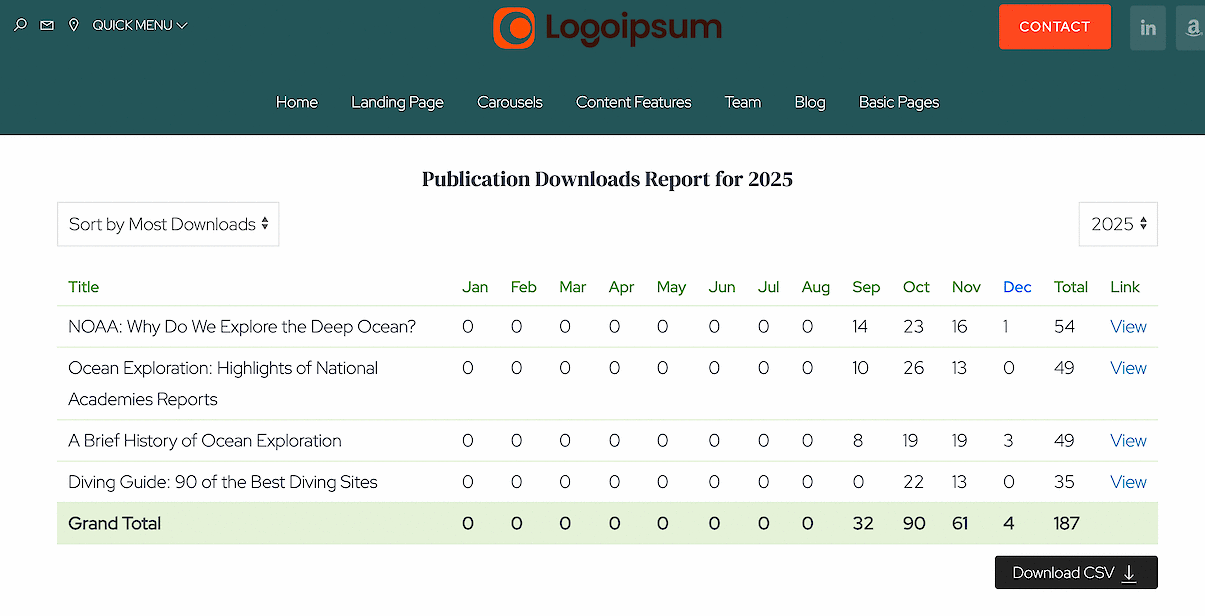




How many people downloaded our report on [whatever]? It's such a simple question. So why is it such a pain to get an answer?
People managing web pages typically drag pdfs into the page and link to it. That pdf usually gets uploaded multiple times in an effort to get the word out (home page: "hey, it's new!" ... project page: "details here!" ... news page: "proud to release our whatever report") but since analytics programs track page views and not downloads, there's no easy way to tell how many people who visited a page downloaded that pdf. And if the pdf is in multiple locations? It gets harder.
- Google Analytics: The industry standard of the tracking world doesn't automatically track downloads. Seriously, Google? Think about that for a minute. It can do what you want, and if this process seems reasonable to you, you are all set. I would rather slog through the Mines of Moria than navigate Google Analytics which is both labyrinthian – and changes all the time.
- Server Logs: Old, reliable server logs generally have a top downloads report, but usually by month. This means selecting month and year, and then pulling out totals for the documents you are tracking – and repeating up to twelve times. Server logs don't generally have a terrific UI, since they are the Unix version of the Dead Sea Scrolls.
- Other analytics platforms – and there are loads. They run anywhere from a few bucks to hundreds every month. Currently, I'm using the free version of Umami, which is okay, but also doesn't track downloads...
Most analytics focus on commerce.
The "tracking web" is very big on my "visitor journey" with the goal of making sales a nanosecond faster. But, like many B2Bs and nonprofits – there's nothing to buy at my website. And frankly, how you got to any page is kind of soft data compared to the hard data of a download.
So, I decided to try coding it myself since I already offer a publication library in my platforms.
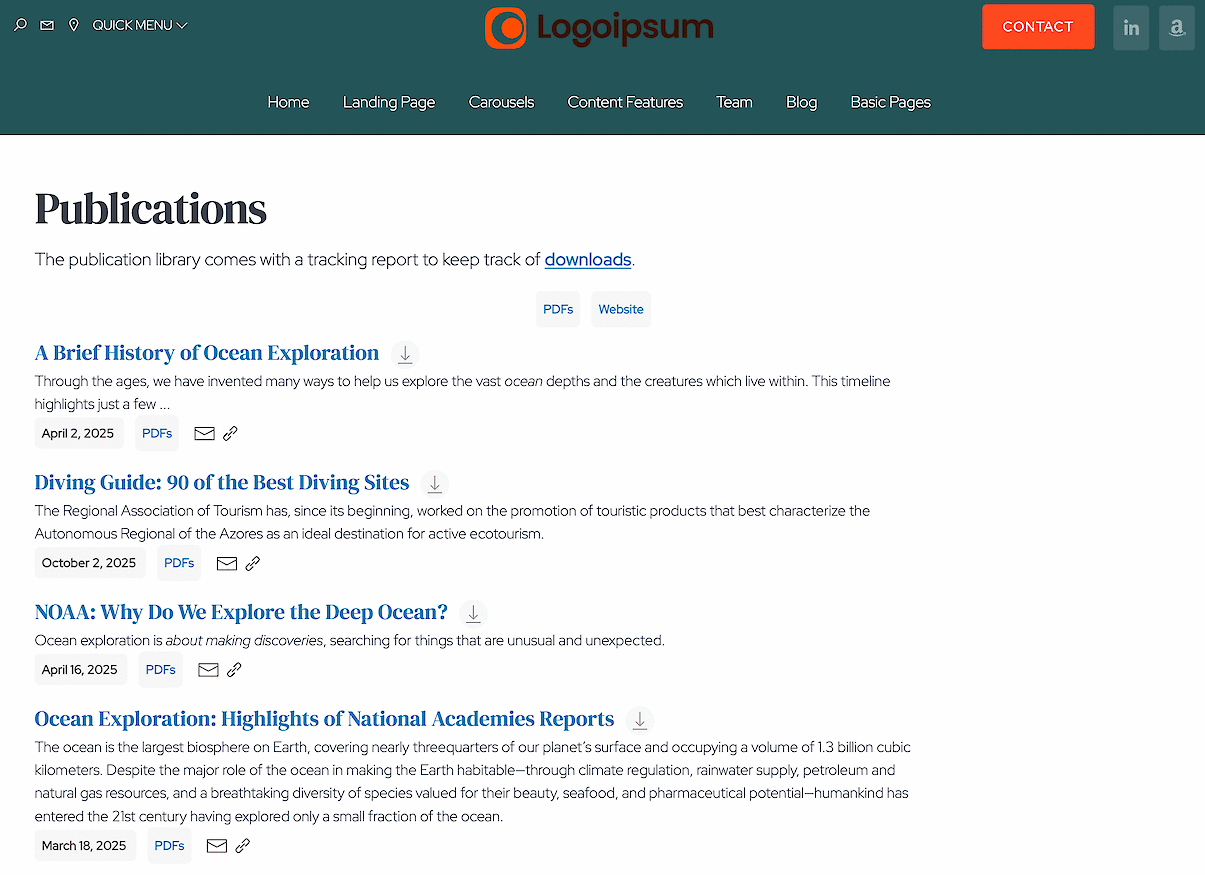
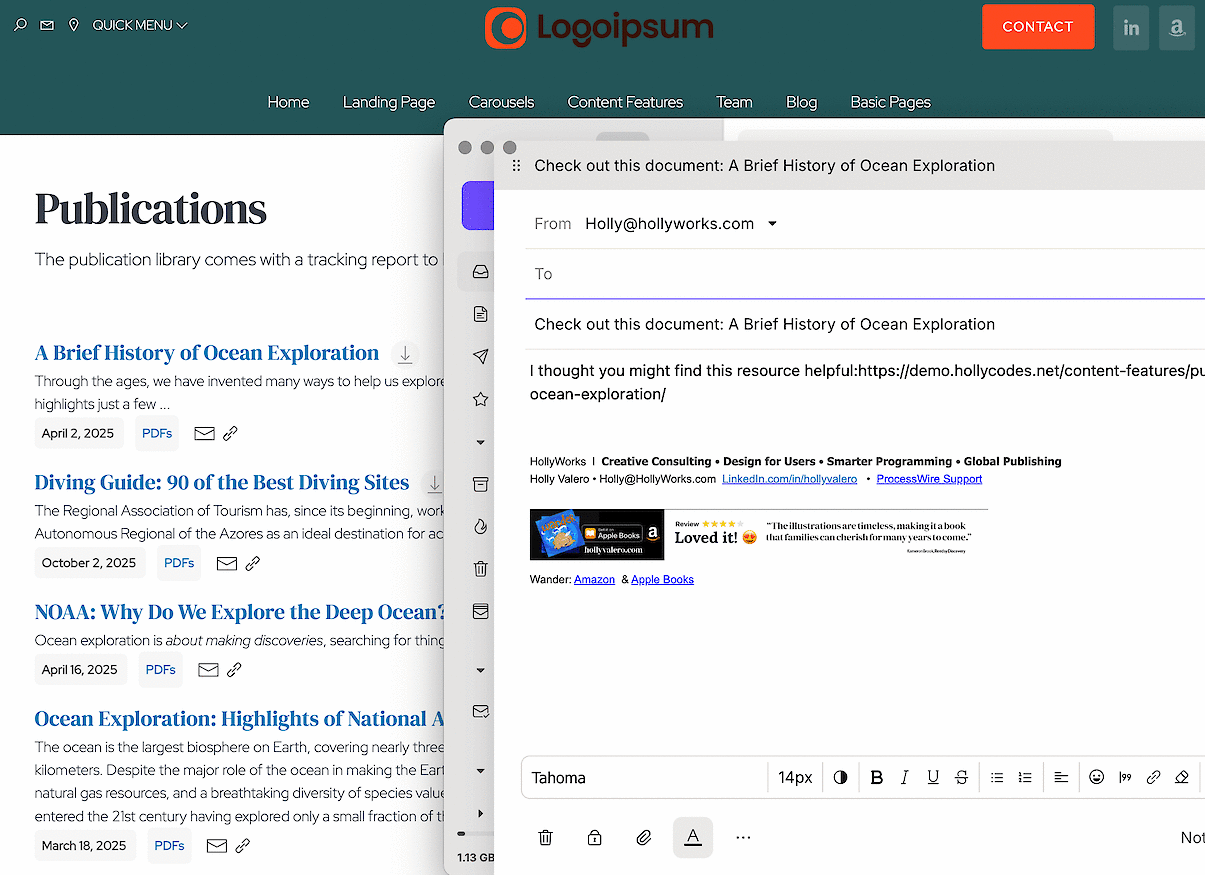
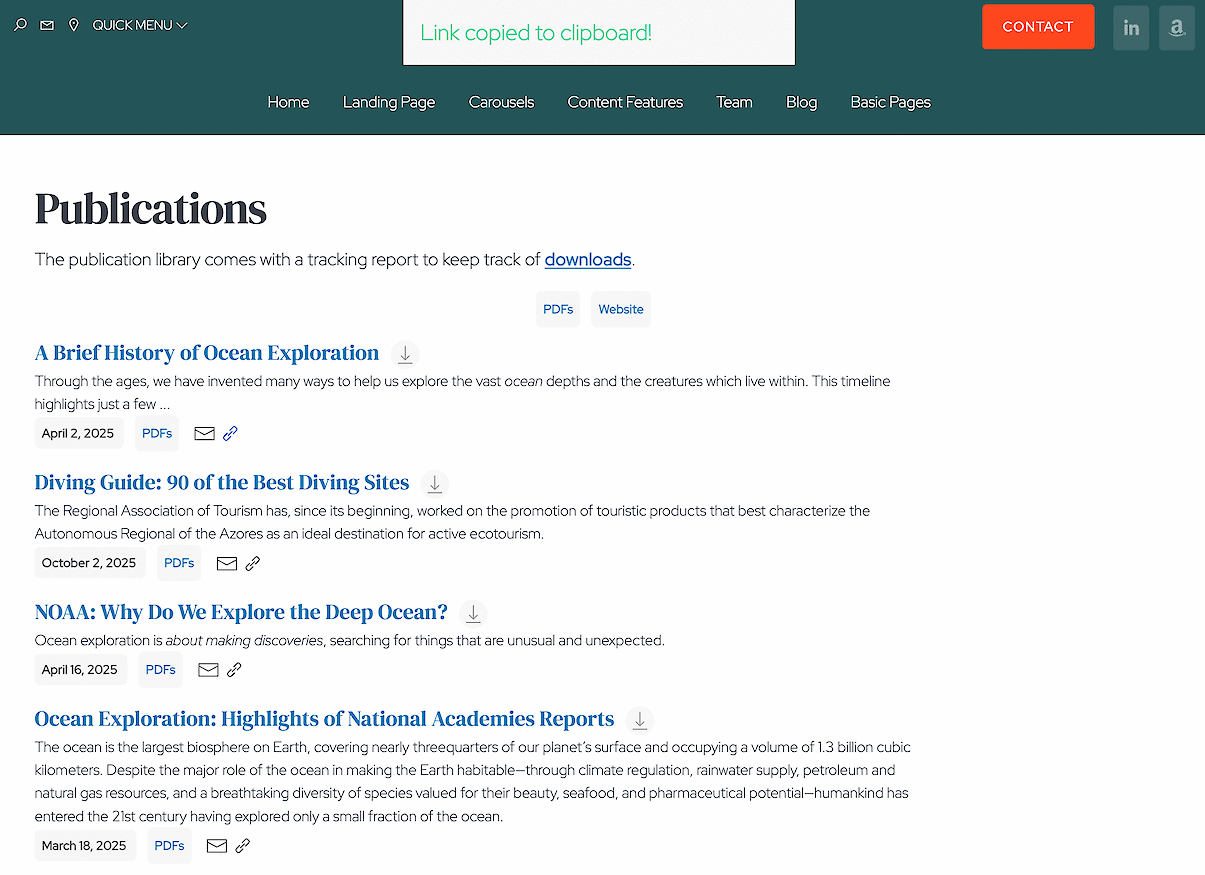
Step one was to update the front end of the publication library, to make it easier to quickly email docs, grab links to docs, or download docs...
Download button:
Email option:
"Copy Link" option...
The next step was to add a little programming to the publication template, to create a log to track clicks. The publication library is a one-stop place to store both downloads (PDF, DOCX, etc.) or links to documents (GuideStar, ISO.org, etc.)...
Clearing the evaluation hurdle for funders and board members
I needed a report that was pretty old school. Numbers by month, over time, subtotals.. I didn't want to try and re-invent evaluation because while boards and funders are big on accounting and evaluation, the "download" is still the accepted gold standard for success – at the moment.
Tracking downloads of data, reports, charts – it's a cornerstone of this reporting. It normally happens once or twice a year because the process of mining that data is time-consuming and difficult. But now?
- It's automatic.
- It's easy.
- It's ongoing.
- It can be public or private.
- It's sortable
- It's even downloable
Presenting - the download report - a simple report page to show downloads by document, by month, with totals, sortable by title or popularity, and finally – add a CSV export so it's easy to add to any spreadsheet. By making it a practice to upload your documents to the library – and then link to them there – this report will create itself.
- It will save a ton of time.
- It requires no learning curve or third party training.
- It will track all your documents so you don't have to decide which ones are mission-critical.
- It provides accurate accounting – by keeping the one source document in the library.
- It can be referenced anytime for any funder check in.
Problem solved.