



AI services routinely offer accounts with "x" amount of "tokens"... You usually get a hefty chunk of tokens for free to take that service for a test drive. After you quickly blow through those free tokens, you have to purchase more. What does it cost when you start paying for AI? The costs start small but quickly scale up

Tools vs Solutions
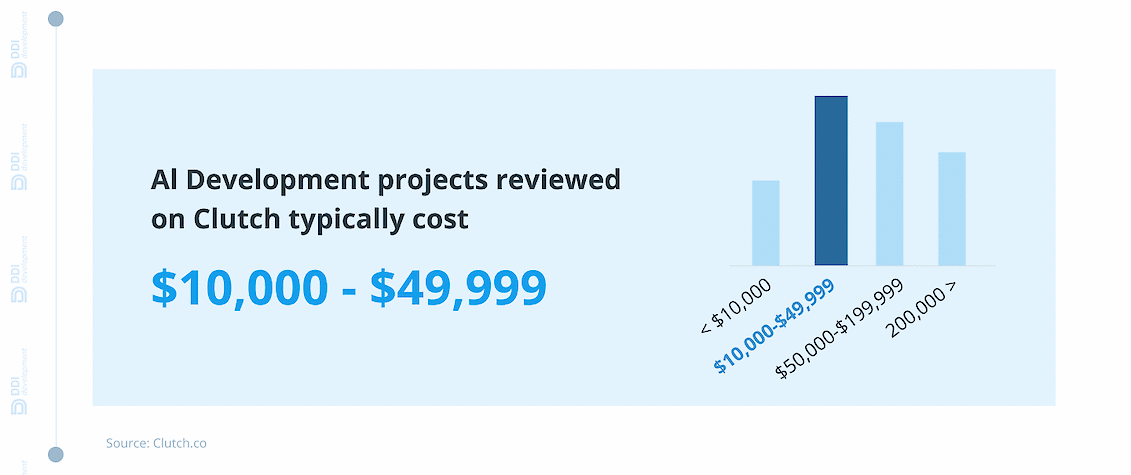
On average, AI tools cost $50 – $10,000 per year - that's quite a jump, while AI solutions cost $100 - $5,000 a month. Adding a basic rule-based chatbot to your web business in 2025 can range from $5,000 to over $1 million. And custom AI development projects typically range between $10,000-$50,000.
AI development, in this way, is similar to creating an iPhone or Android App:
- For custom, bespoke development: there's a significant up-front expense, plus a lifetime of more expensive maintenance to keep up with your evolving AI platform.
- For business development: there's pre-fabricated, pre-trained models, cloud solutions, and outsourced options
- For small businesses: tokens and subscriptions
Small businesses cobbling together AI services on the fly from a variety of subscriptions may not feel any improved automation, or integration, but those investing in a "solution" may have to deal with vendor lock-in. As you fine tune your virtual staff in a thousand ways and become more and more entrenched, there's no easy way to switch vendors should the price jump, or the company fail.
Chat histories, prompts, assistant and model tweaking - and any/all API adjustments made are proprietary. You can't take it with you.
Why does this matter?
In the article, AI is a Floor Raiser, not a Ceiling Raiser, a variety of graphs illustrate that when it comes to a learning curve, AI is most effective at bringing people up to speed and functionality sooner and faster – but as those individuals get smarter, AI is less effective in achieving mastery. Which means time is actually on your side.
If you start small with several AI tools, and your skills quickly ramp up, you may get to the point where you find better AI tools that do the trick. You may not need a "solution." This allows your business to stay nimble. You can better control costs, while remaining free from locking into a proprietary system.
It also gives you a couple of years to track the success –– or failure of potential AI candidates –– without tying your success or failure to them. The share of businesses scrapping most of their AI initiatives increased to 42% in 2025, while over 80% of AI models are expected to fail in general. Like any new technology, there's a two-three year shake out before things stabilize.