




AI has a trust problem. Realistic fake photos. Bogus-location videos of events that never happened to people who weren't there. Aggregated report-length text peppered with misinformation and hallucinations. It's more work to validate AI than it is to do the work yourself. Or, it was...
Despite its tagline, "Search like never before," Perplexity.ai is not a search engine so much. It's a find engine – that cites its sources and provides such well-thought-out responses, that it's changing the way I think of "search." Instead of Googling half a dozen aspects of a topic to piece together a mental outline, I posed a more in-depth question to Perplexity: What steps can I take to climate-proof my Maine property and create a wildlife sanctuary for birds?
Not rocket science, but there's a bit to unpack in this. Maine property, climate-proofing, wildlife – followed by birds. The first page of results was impressive:
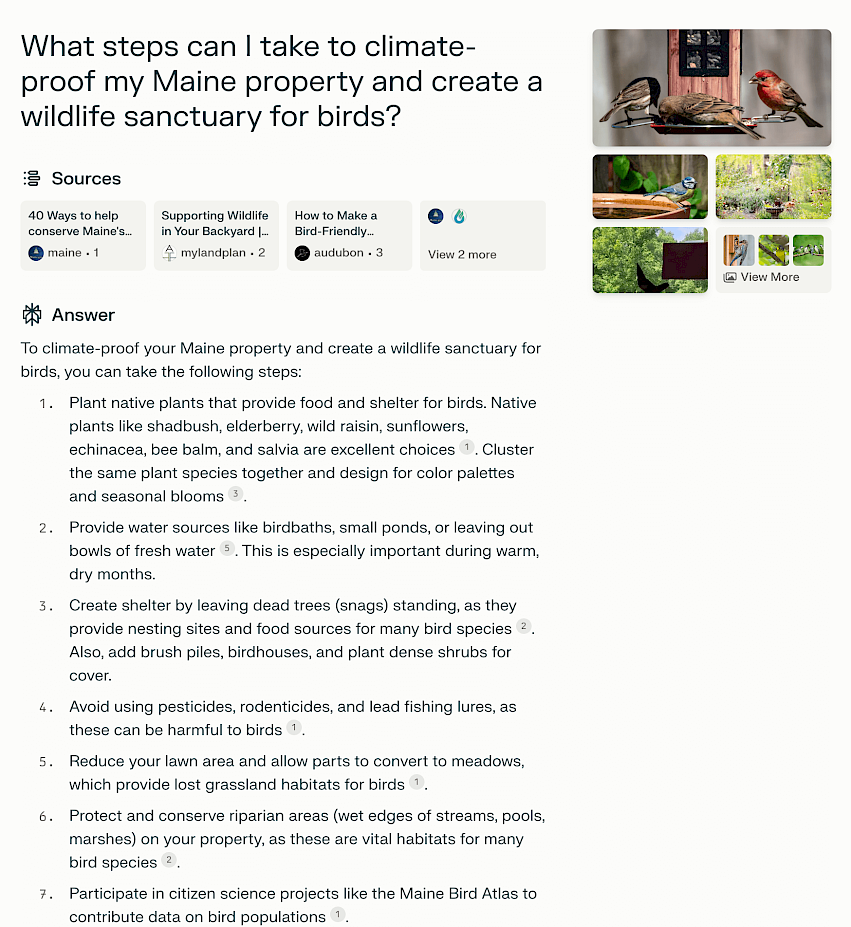
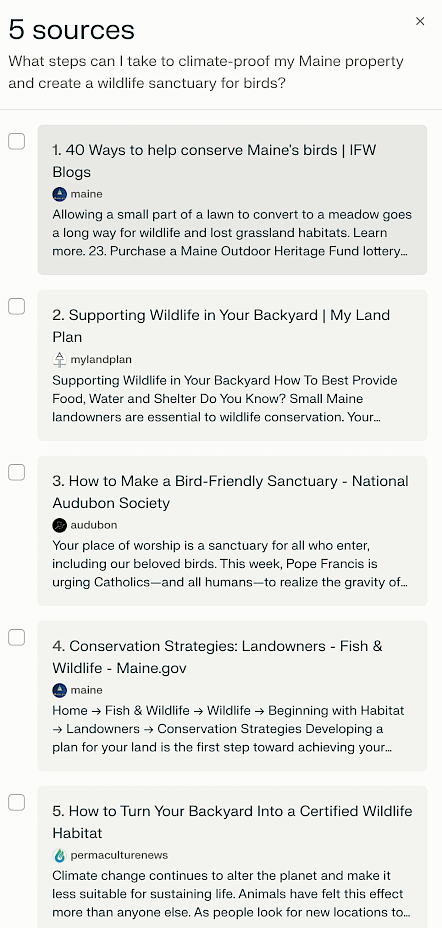
Sources are cited, include rollovers and a slide out from the right side of the page listing all of them with links... All sources were good, and there's an option to select any single source and remove it.
Below the first screen I found a variety of follow-up topics:
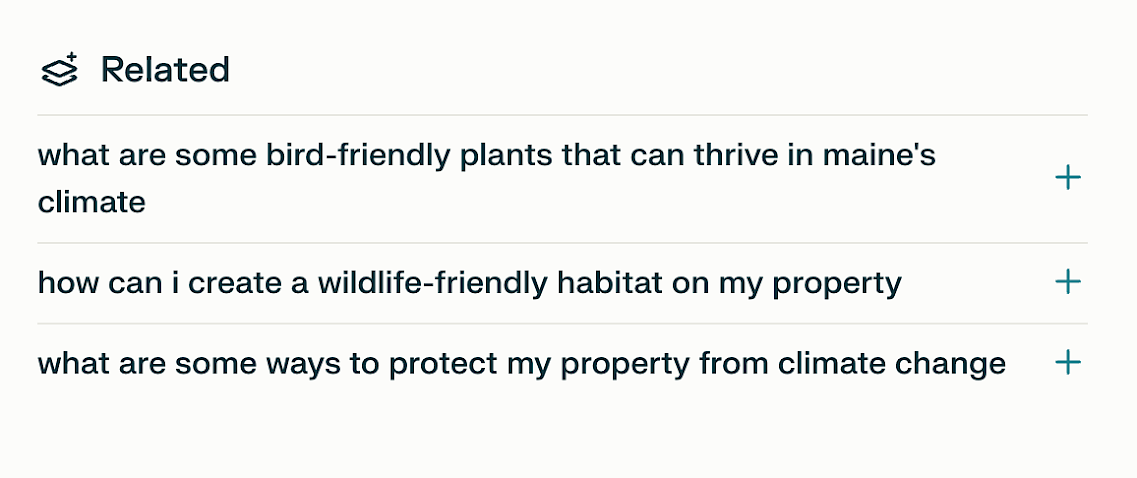
Each of these topics again, listed citations, and images if there were any applicable.
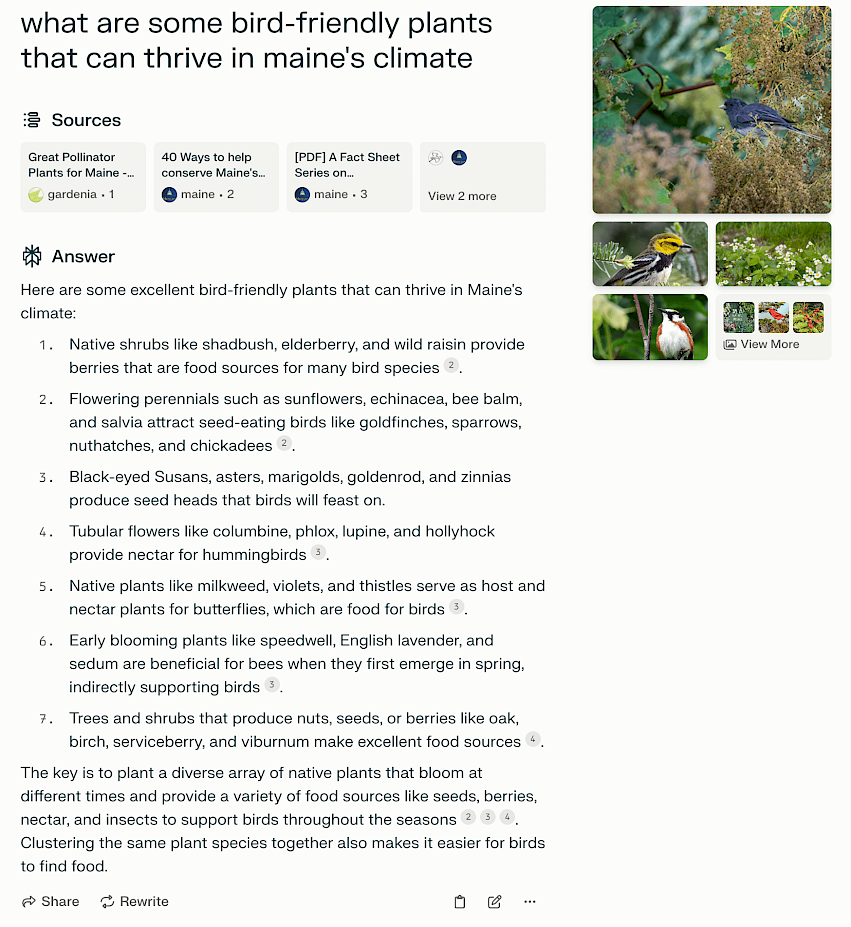
I especially liked this:
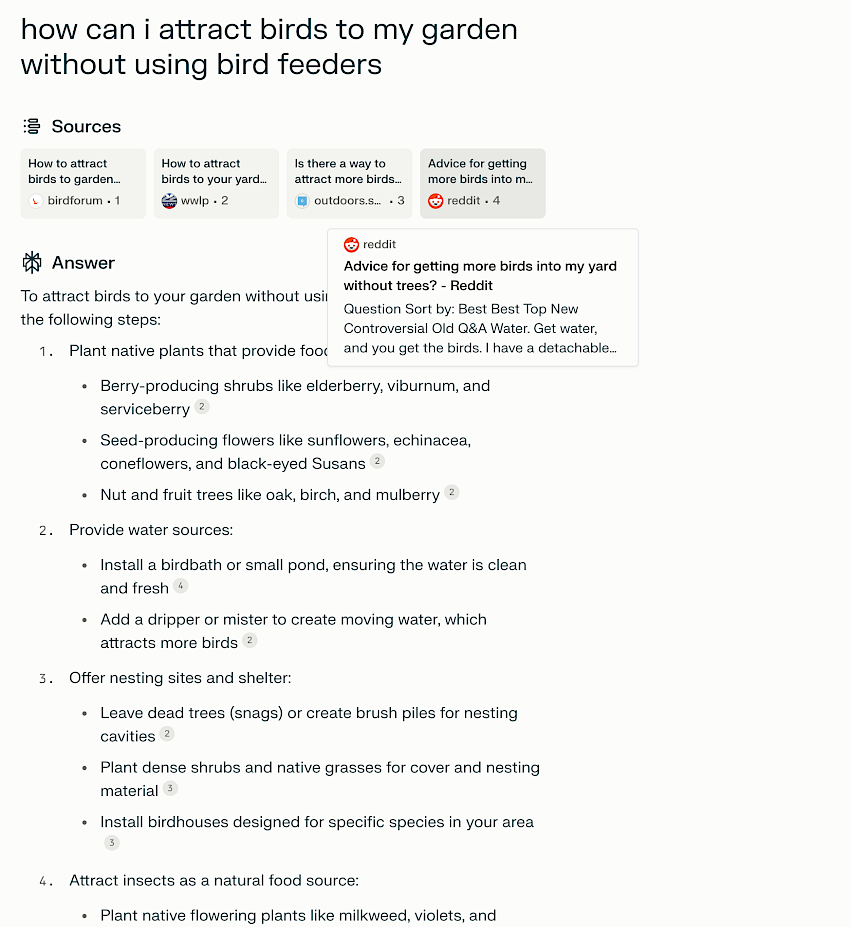
This tranche of data provided interesting data gems -- answers to unasked questions. That dead tree in the back? Maybe leave it...

The free account at Perplexity allows for 5 pro searches daily, and unlimited quick searches. The Pro account is a fairly hefty $20 a month but doesn't rely upon tokens and comes with 600 Pro searches daily. For a researcher? Sure.
To compare, I did the same search at Google. On my desktop, I got a fairly straight forward list of many of those cited sources – with typical Google search result text. Let's call this Search 1.0. Search 1.0 is defined by search and search and continue to search and then weed and piece everything together.
On my iPhone I had Google's option for an AI-generated answer in Chrome. I'll call that Search 2.0. Some data bits were on topic. Others wandered. But no citations and no links. So while "Create a habitat blueprint" was a new and interesting point – there was nowhere to go from there. What is a habitat blueprint? Where would I find one? Should I make one? How do I do that? Google so wants me to trust its AI that it doesn't provide links – a very non-Google thing to do – unless the plan is to sell that aggregated slot to sponsors. Search 2.0 is "just trust us."
Perplexity introduces us to Search 3.0. Search - and find.
OMG. Is this what a Post-Google World looks like? Because Perplexity is making Google look lame.