

One of the most popular uses for the exploding Ai industry is creating fun avatars for your facebook profile. Most of these ask your to feed 10-20 pictures into an app like Arta ai, maybe do a little fine tuning, pay $7-10 and wait 40 minutes for a bunch results. Another popular use is generating unique artwork from scratch based upon text prompts. My favorite art creation tool is Dream by Wombo. It's faster, and delivers artwork that is closer to what I was hoping for. DALL•E also produces quality artwork, but their servers are frequently overloaded with requests, while Wombo seems to be more accessible.
Example: "eat more cheese slogan in the style of a north korean propoganda poster"
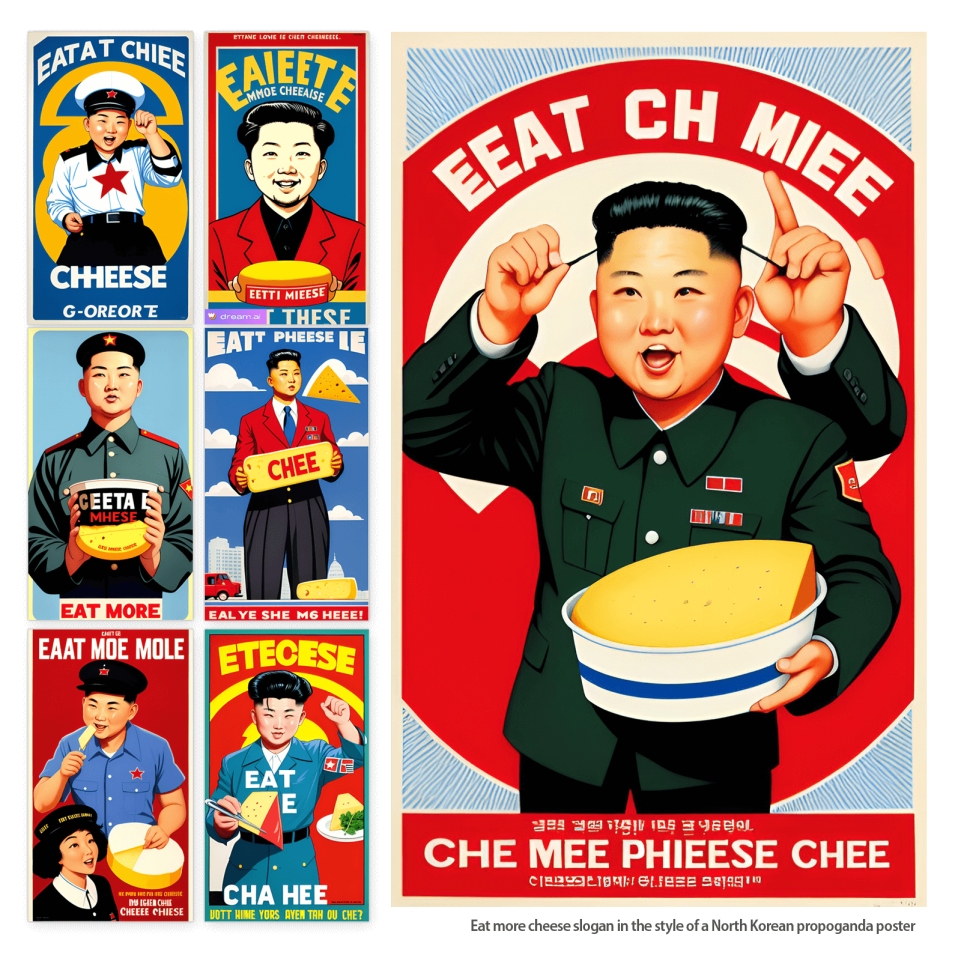
At first look it feels impressive. As you look closer, you'll notice extra arms and fingers, and spelling that is pretty freeform. Over time, this will improve. And this will create new problems. How to tell if an image is real?
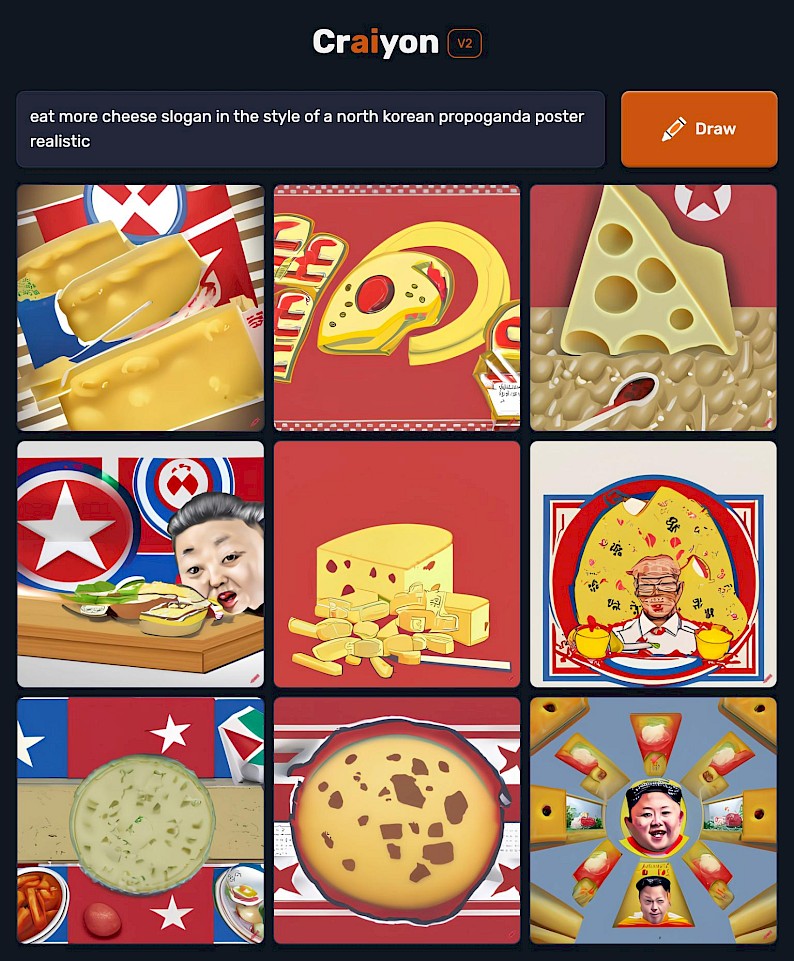
Craiyon Ai produces more images in a batch, but the results felt more primitive.
On the plus side, this is a fun and easy way to create art for things like blogs. On the downside, all artwork produced is based upon tons of initial artwork being fed into the ai engine, and that is generating equal amounts of copyright infringement. Getty Images has already filed one lawsuit.
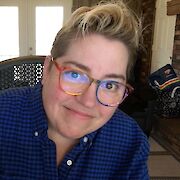
AI image generators are powered by Generative Adversarial Networks, or GANs. One possible way to detect a fake photo is to use a GAN Detector. I uploaded the avatar I'm using on this post – generated by Arta Ai. The prediction engine returned a "Maybe GAN generated" verdict. Correct! There's also a Google Chrome extension called Fake Profile Detector – tools and counter-tools evolving together.